“It is wonderful to be grateful and to sing your praises, LORD Most High! It is wonderful each morning to tell about your love and at night to announce how faithful you are.” Psalm 92:1-2 – CEV
Six weeks ago we left Canada and we are now getting settled in Lubango, southern Angola, Africa. We will share one of the Mission Aviation Fellowship houses in a walled compound here for the next few months. Friends have shown us around town and we can now find the shop that sells the freshest eggs and another store that sells cassava (manioc) flour for Audrey’s gluten-free baking. There is one mall, but there are no “super-stores” here – at times shopping seems like a scavenger hunt!
It has been a huge help to have the part-time use of a MAF vehicle for our visits to the CEML hospital – the Centro Evangélico de Medicina do Lubango. We are getting to know the staff and recognizing some of the areas in which we can help. Norm has made some progress in getting the hospital's phone system back online, assisting (and translating) for the installation of a new blood chemistry analyzer in the lab, as well as the X-ray digitizer system which will allow
Canadian radiologists to review and give advice on more difficult cases. Audrey has been observing how the nurses work and spent two days translating for a visiting cardiologist. We haven’t yet received our work visas, so we don’t have a regular schedule or formal roles.
Life in Angola
Safe roads, clean water, and medical care cannot be taken for granted here.
 |
| Potholes, traffic... |
 |
| Large, wet potholes, traffic... |
 |
| The view from a taxi | |
Roads: Our introduction to Angolan roads was the two day drive from Windhoek, Namibia to Lubango, Angola as part of a convoy of 4x4 vehicles. We skirted the Kalahari Desert where local people have been so glad to see black clouds swirling - rain is desperately needed for crops. Just as we finished changing a flat tire, the clouds burst open. We were delighted to see a beautiful Oryx, some other antelope, and warthogs along the road in Namibia. Few wild animals survived the privations of the 30-year civil war, so the only animals we see in Angola are goats and long-horned cattle wandering across the road.
Added to that hazard, in some sections of the highways there are deep holes in the pavement, or rain has simply washed away the earth leaving rocks and deep ruts. At times, there are little waterfalls where the road should be. We need to be alert! Taxi-vans and motorcycles dart in and out, passing dangerously – only occasionally do motorcyclists wear helmets. In Angola, they are having one of the wettest rainy seasons of recent years, causing rockslides on the road down the escarpment (the Leba) as well as destroying a bridge, causing the loss of Lubango’s only Fiber Optic connection, causing major issues for local Internet and cell phone providers. Unfortunately CEML’s satellite Internet has also failed once again, due to lightning.
An Angolan Driving Legend
Several doctors attending a conference in Nairobi were comparing notes. The Kenyan mentioned that they drive on the left, and the Congolese noted that they drive on the right side of the road. “And,” they asked the Angolan, “on which side do you drive?” The response: “In Angola, we drive on whichever side is better!”
Medical care: Patients come to the CEML hospital from as far as several hundred kilometers, advised by friends or doctors elsewhere, often with very advanced diseases including many cancers. Audrey was able to encourage the nurses in their care for a young girl who was gradually being paralyzed by an inoperable tumor. There are many gaps in the standard of care even at CEML, the equipment isn’t always working, and medications aren’t always available, but the doctors listen, care, and demonstrate the love of God to every patient.
 |
| A rural health post! |
A woman with landmine injuries during the war recently had skin grafts which are healing well. Several babies have received shunts for hydrocephalus; high rates probably result from maternal infections. CEML is one of only two places in the country where this is possible. Many patients need to be treated for malaria before they can have the surgery they need.
Water: Diseases resulting from contaminated water, such as typhoid fever, are common. One complication of typhoid is perforation of the intestine, requiring immediate surgery, as was done for a young man recently. We are grateful to have a good water filter at home! Audrey was able to review precautions with the nursing staff, so that they could alert family members about how to avoid this disease. In general, community follow-up is a major problem.
A couple of weeks ago we noticed a local woman washing out plastic grocery bags in the storm sewer – hundreds of Angolans sell vegetables on the street using such bags. Mounds of garbage line the streets and the rivers that are used for laundry, as a water source, and for everything else.
Houses may have running water but the system is not in good repair, and the municipal pumps depend on electricity that can be off for days at a time in some areas.
 |
| Sunset in Lubango |
Thanksgivings
• that we are able to communicate in Portuguese – and for passing grades in our exams last November.
• for good health.
• for safety on the roads and a relatively hassle-free arrival.
Prayer Requests
• for rapid issues of our work visas – and those of others, in particular our doctor from Brazil.
• That we will be able to develop more relationships with Angolans.
• For the CEML hospital, that God’s compassion for those who are suffering will be evident.
Ministry Partnership
We are so grateful for all of you who are supporting our ministry with MAF in prayer and through financial gifts. If you have been thinking about partnering with us in this way, please consider contributing to the Vehicle Fund – we are expecting the Toyota Hilux 4x4 to arrive in early April, but it is not yet fully funded. Please contact MAF Canada at +1(877) 351-9344, MAF USA at +1(800) 359-7623, or any other of MAF’s national offices listed at
http://www.mafc.org/other%20mafs.htm. Please mention “MAF Canada project V78C”. Gifts are tax deductible in most countries.
With our love and God’s blessing,
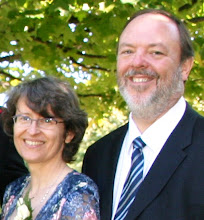
Norm & Audrey
Permanent Mailing Address: 315 Clemow Ave., Ottawa, ON K1S 2B7 Canada
Internet phone: +1 (613) 526-1245
Email: norm.audrey@gmail.com Skype: norm.audrey
Field Address: CP 50, Lubango, Angola (via Portugal)
Norm-cell: +244 (913) 569 260
Audrey-cell: +244 (913) 569 217
MAF Canada Office: 264 Woodlawn Rd W, Guelph, ON N1H 1B6 Canada
Web: http://www.mafc.org http://salmos127.blogspot.com
* “Each gift designated toward a MAF board-approved program will be used as designated with the understanding that when any given need has been met, additional designated gifts will be used where most needed."